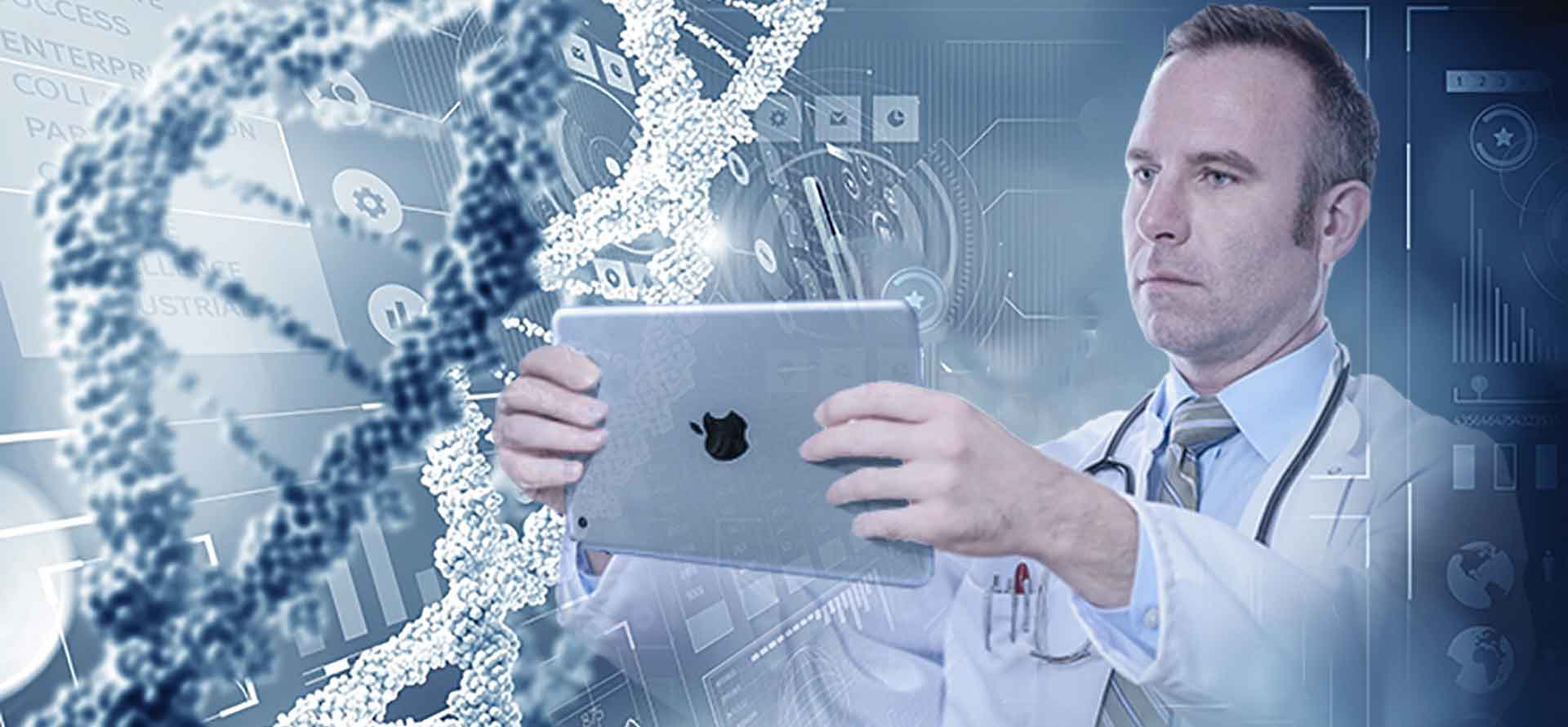
What is Precision Medicine ?
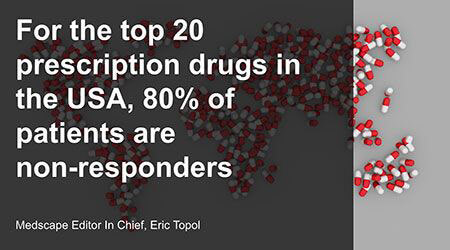
For decades, the most common practice of medicine has been a one-size-fits-all solution with trial-and-error practices that often result in suboptimal outcomes and unnecessary costs. Moreover, for the top 20 prescription drugs in the U.S., 80% of patients are non-responders, and adverse reactions due to such imprecise medications are responsible for 30% of acute hospital admissions every year.
Precision medicine promises significant improvement in care delivery. The Precision Medicine Initiative defines precision medicine as “an emerging approach for disease treatment and prevention that takes into account individual variability in genes, environment, and lifestyle for each person.”
For years, physicians have tailored their treatment protocols to specific factors such as age and gender, patient preferences, mobility levels, community resources, preexisting conditions, and other mitigating circumstances.
The difference between a traditional assessment of a complex situation and true “precision medicine” is the degree of reliance on data – genomic and clinical data – to make decisions about specific treatment paths that may be more or less effective for the individual patient. The scientific and technological advancements today have made such reliance feasible and cost effective.
By combining genomic data with clinical, pharmaceutical, and socioeconomic information, and then applying analytics to these integrated datasets, researchers and providers can observe patterns in the effectiveness of particular treatments and identify the genetic variations that may be correlated with success or failure. Turning the specific patient data into intelligence and then integrating that intelligence into clinical workflows, will enable precision medicine practices by tailoring the best treatment plans to the specific profile of each individual.
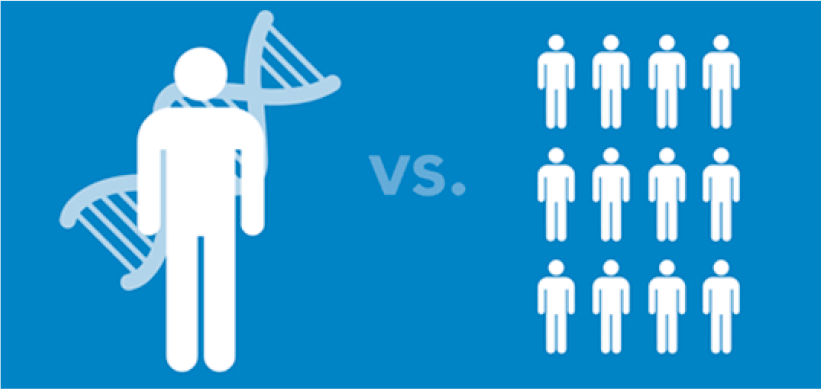
THIS IS THE PROMISE OF PRECISION MEDICINE
Why is Precision Medicine difficult to achieve?
New and extensive data sets have become more cost effective to capture and use for analytical purposes. However, they remain locked in data silos that are focused on the specific types of measurements being made. For example, clinical data in the EMR may not be well structured and integrated with genomic, imaging, or life style data.
The technology needed to integrate and analyze the data from these data silos is just beginning to become available in the healthcare industry. Artificial Intelligence and big data analytics tools show great promise in advancing clinical care, but without extensive analytical and clinical experience, the sheer scale of the data makes it very difficult to develop actionable insights. In addition, the newly derived insights need to be incorporated into the clinical workflows.
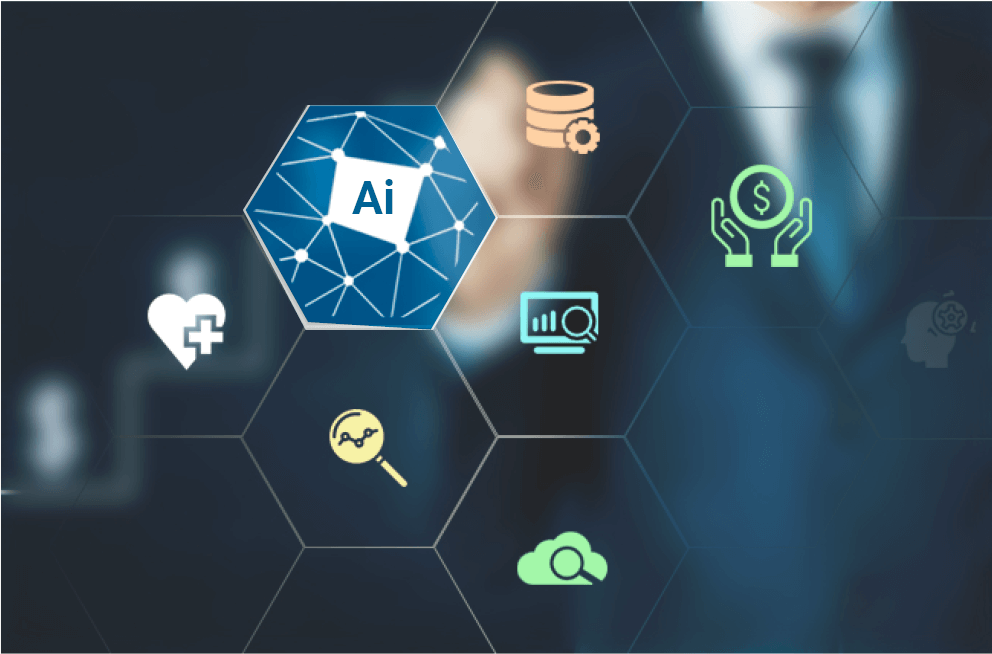
THIS REQUIRES PRECISION INTELLIGENCE
Why Jintel Health can be successful where others struggle.
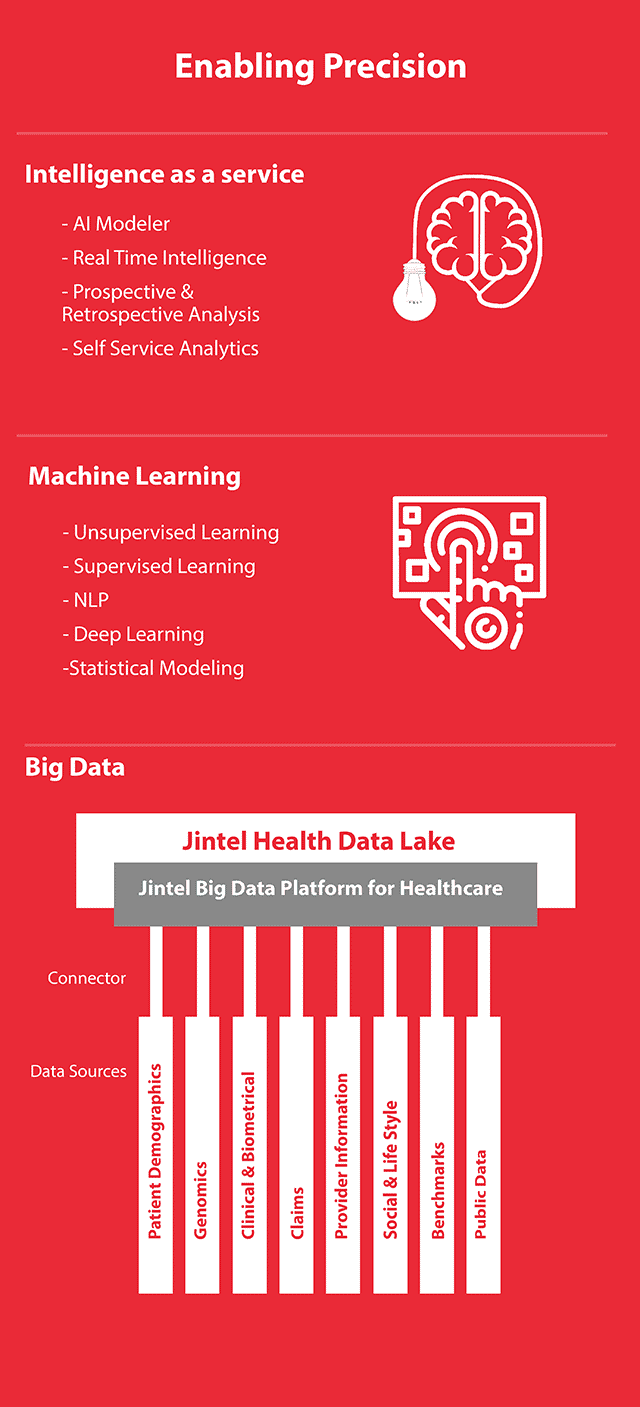
Jintel Health has strategically assembled an exceptional team with decades of experience in clinical workflows, big data analytics, and artificial Intelligence tools. This core competency is of critical importance to the success of applying these tools to healthcare.
Jintel Health has developed an innovative precision intelligence platform which captures and structures large clinical and genomic datasets, and then applies our advanced analytics and machine learning to enable precision medicine.
The platform is capable of combining data not only from the “Continuum of Care”, but also the Person, Tissue, Cellular, and Molecular measurement levels available in the current practice of medicine.
Jintel Health has created a large and comprehensive data ecosystem and intelligence refinery to capture data, turn data into intelligence and deliver “intelligence as a service” for enabling precision medicine with focus on cancers first.